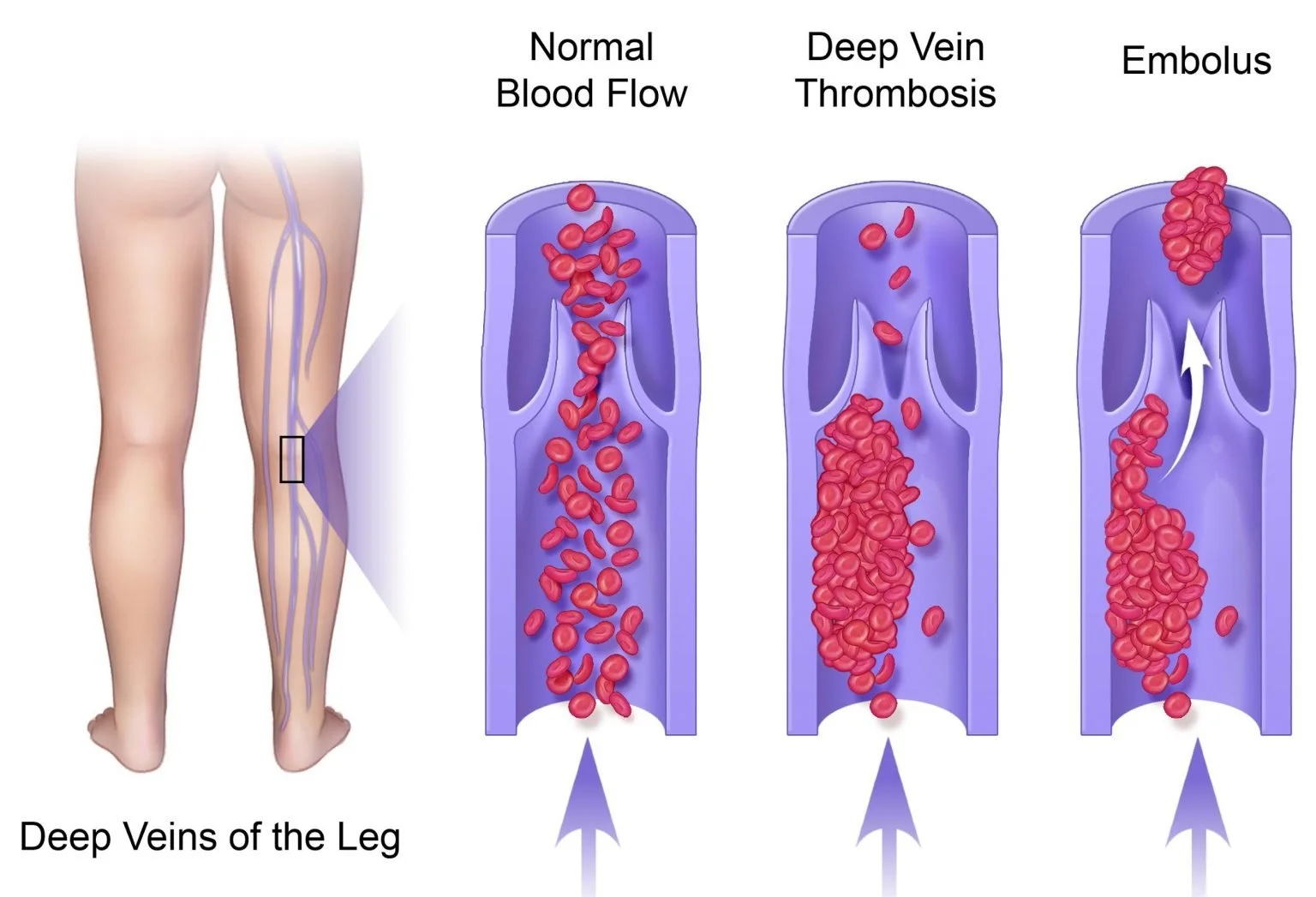
Deep Vein Thrombosis (DVT) in Singapore
Recognising a deep-vein clot, understanding treatment and planning follow-up.
A deep vein thrombosis, or DVT, is a blood clot in a deep vein, most often in the leg or pelvis. It can obstruct blood returning to the heart. Part of a clot may also travel to the lungs and cause a pulmonary embolism (PE). DVT and PE are collectively called venous thromboembolism.
Treatment depends on where the clot is, its extent, symptoms and the balance between further clotting and bleeding risks. Anticoagulant medicines are central to care for many patients; a procedure is considered for selected circumstances.
Which symptoms need urgent help?
New swelling in one leg, calf or thigh pain, tenderness, warmth or a change in skin colour needs urgent medical assessment. DVT can also cause few symptoms. Neither a photograph nor a symptom checklist can confirm or rule it out.
Sudden breathlessness, chest pain, coughing blood, fainting or collapse may indicate PE and need emergency assessment. Call 995 in Singapore for life-threatening symptoms; do not wait for a clinic appointment or online reply.
Severe, rapidly worsening leg swelling or pain, particularly with a marked colour change, also needs emergency care. The video article on a red, hot, swollen and painful leg explains why a new change should not be dismissed.
For planned follow-up after a DVT or review of persistent symptoms, contact the clinic. Use the records checklist to prepare discharge letters, scan reports and your medication list for the consultation.
Why does a DVT develop?
Clot risk can rise when blood flow slows, the vein lining is injured or the blood becomes more likely to clot. Relevant circumstances include:
Recent surgery, injury, hospital admission or reduced mobility.
Active cancer and some medical or inherited clotting conditions.
Pregnancy, the period after childbirth and certain hormone medicines.
A previous DVT or PE.
Long journeys involving limited movement, particularly alongside other risks.
Sometimes there is no clear trigger. This matters when discussing future prevention, but the absence of recent surgery or travel does not exclude a clot. Read why blood clots form for the underlying explanation.
How is a suspected DVT investigated?
A clinician assesses symptoms, risk factors and examination findings. A venous ultrasound is commonly used to look for a clot and establish its location. The article on duplex ultrasound explains how images and blood-flow information are combined. See our DVT scan service for further information. New symptoms need prompt clinical assessment rather than a routine screening booking.
A D-dimer blood test is useful in particular diagnostic pathways, but a raised result does not prove DVT. Its interpretation depends on the clinical likelihood and other circumstances. If the first investigation does not resolve the concern, repeat ultrasound or other imaging may be advised. Follow reassessment instructions if symptoms persist or worsen.
How is DVT treated?
Anticoagulant medicines
Anticoagulants, often called blood thinners, reduce further clot formation and extension while the body gradually deals with the existing clot. They do not physically remove it. The choice of medicine takes account of kidney function, other medicines, cancer, pregnancy and bleeding risk.
Take the prescribed medicine as directed and check before stopping it or adding medicines or supplements. Tell healthcare professionals that you take an anticoagulant. Significant bleeding needs urgent medical assessment. If you hit your head while taking an anticoagulant, attend an emergency department promptly, even if you feel well. Call 995 for heavy bleeding, collapse or other life-threatening symptoms.
Selected clot-removal procedures
For a recent, extensive and severely symptomatic clot involving major thigh or pelvic veins, a specialist may consider catheter-directed clot-dissolving treatment or mechanical clot removal. A threatened limb is an emergency. Selection considers symptom duration, anatomy, functional needs, bleeding risk and the expected benefit compared with medication alone.
These treatments can cause bleeding, vessel injury and other complications. They do not guarantee normal long-term vein function or remove the need for anticoagulation. Read Dr Choong’s explanation of when modern DVT clot removal may help.
If significant narrowing or compression of a pelvic vein contributes to the problem, further assessment may lead to discussion of a stent. A scan finding by itself is not a reason to insert one.
How long does treatment continue?
For many treated DVTs, an initial anticoagulation course lasts three to six months. This is followed by an individual decision about stopping or continuing to prevent recurrence. Some people need longer treatment.
The review considers the clot’s location, whether a temporary trigger has resolved, previous clots, ongoing medical risks and bleeding risk. Feeling better does not establish that treatment can stop. Keep the agreed review appointment and do not change the course independently.
What if swelling or discomfort persists?
Some people develop post-thrombotic syndrome: continuing heaviness, swelling, skin changes or, occasionally, ulcers after a DVT. It can reflect residual obstruction or damaged vein valves. Persistent symptoms deserve assessment rather than an assumption that another clot has occurred.
Appropriately selected compression stockings may help pain or swelling. They do not guarantee prevention of post-thrombotic syndrome, and their fit and suitability need individual advice. Compression does not replace anticoagulation when that is indicated. Activity and exercise should follow the treating team’s advice.
Read the post-thrombotic syndrome guide for persistent swelling, discomfort or skin changes after a previous DVT. It explains the distinction from a new clot and how compression, activity and selected venous procedures are considered.
Common questions about DVT
Is DVT the same as varicose veins?
No. DVT is a clot in a deep vein; varicose veins usually involve enlarged surface veins and faulty valves. A sudden change still needs assessment even if you have longstanding varicose veins.
Can a DVT happen again?
Yes. Follow-up includes future clot risk and precautions around operations, illness and travel. Preventive medicines or stockings should be individually advised rather than started for everyone.
Non-emergency DVT follow-up in Singapore
For a planned review of a previous clot or persistent venous symptoms, contact Andrew Choong Vascular Surgery at Mount Elizabeth Novena Specialist Centre, #09-22, 38 Irrawaddy Road, Singapore 329563. Bring discharge letters, scan reports and your medication list. Read about Dr Andrew Choong. New suspected DVT or PE symptoms require urgent assessment first.
Blood clot videos
Watch Dr Andrew Choong explain what a deep vein thrombosis is. The blood clot video collection covers clot formation, DVT warning signs, pulmonary embolism and selected treatment approaches.