The Australian and New Zealand Society for Vascular Surgery (ANZSVS) is marking today, 19 November 2026, as World Vascular Day. Here’s why your vascular system is important.
What is the vascular system?
Arteries are the supply vessels: they take blood from the heart to the rest of the body. Veins are the return vessels: they bring it back. The two behave differently, and so do the problems they cause. That is why vascular symptoms can look so unlike one another. There is a short video on the difference between arteries and veins.
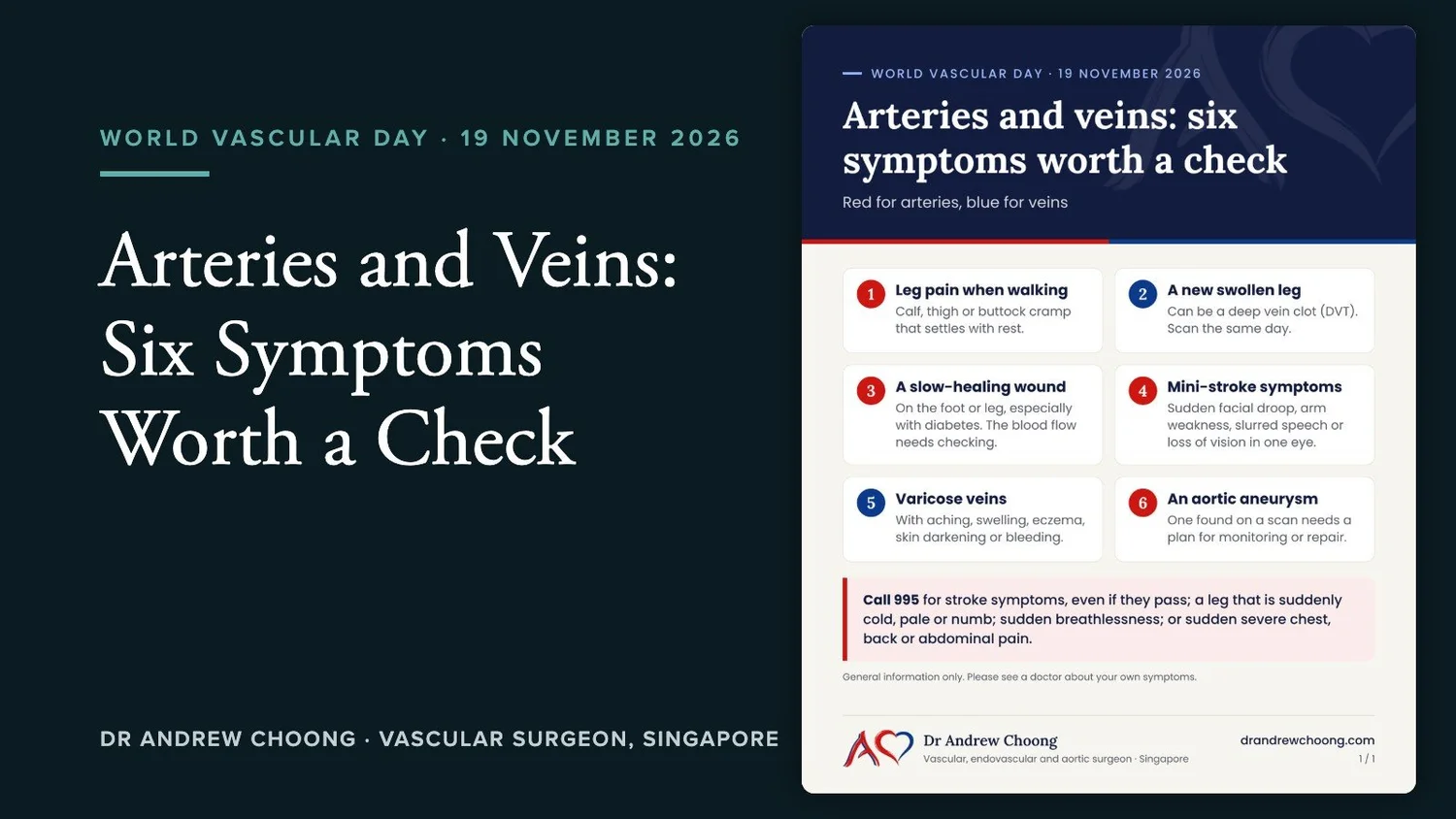
Which six symptoms are worth having checked?
Red for arteries, blue for veins.
- 1Leg pain when walkingCramping or aching in the calf, thigh or buttock that settles with rest can be a sign of narrowed leg arteries. Read: peripheral arterial disease.
- 2A new swollen, painful or warm legIt can be a deep vein thrombosis and needs a scan the same day. Read: deep vein thrombosis.
- 3A foot or leg wound that is slow to healEspecially with diabetes. The blood flow needs checking. Read: diabetic foot and wound care.
- 4Mini-stroke symptomsSudden facial droop, arm weakness, slurred speech or loss of vision in one eye, even if it passes. Read: carotid artery disease.
- 5Varicose veins with other symptomsAching, ankle swelling, skin darkening, eczema or bleeding. Read: varicose veins.
- 6An aortic aneurysm found on a scanIt needs a plan for monitoring or repair. Read: aortic aneurysm and dissection.
Is there a seventh?
Yes. A dialysis access problem, such as a fistula that is not working, is also a reason to see a vascular specialist, and urgent access problems are seen the same day. It was left off the card only for space. Read: dialysis access problems. The fuller guide, including what happens at a first visit, is when to see a vascular specialist.
What should I do if one of these sounds familiar?
Some of these are emergencies, and for those the first call is 995. For the others, most assessments start with a consultation and a duplex ultrasound scan, often on the same day. The contact page has every way to reach the clinic.
Watch the video: Five vascular warning signs you should not ignore.
General information only, not personal medical advice. Please see a doctor about your own symptoms.