Complex Aortic Aneurysms: Why Planning Matters
Complex aortic aneurysm care is more than a choice between a stent and open surgery. Dr Andrew Choong explains how anatomy, scan measurements and overall health shape an individual plan.
Complex aortic aneurysm treatment begins with understanding the anatomy and the person, then comparing the risk of the aneurysm with the risk of treatment. The decision is more detailed than simply choosing a stent or open surgery.
In this video, Dr Andrew Choong, vascular and endovascular surgeon in Singapore, explains why early specialist assessment gives patients time to explore an appropriate strategy before an emergency develops.
What makes an aortic aneurysm complex?
An aneurysm is an abnormal enlargement of an artery. Aortic aneurysms may be complex when they lie close to important branch arteries, extend through both the chest and abdomen, have unusual anatomy, or occur after previous aortic surgery or stent-graft repair.
The branches supplying the kidneys and abdominal organs may affect where a repair can safely seal and how blood flow is maintained. Two aneurysms with similar diameters can therefore require very different plans. Our aortic disease guide provides the broader background.
What does careful planning involve?
Detailed imaging and measurements
Planning may involve CT imaging, three-dimensional reconstruction and precise measurements of the aorta and its branches. Previous scans and operation records are useful for understanding changes over time and any existing grafts.
Assessing overall health and priorities
Kidney function, heart and lung fitness, previous procedures and the patient’s goals all matter. The discussion should explain the likely benefits and risks of intervention, the alternative of surveillance, and the practical demands of recovery and follow-up.
Which treatment approaches may be considered?
The options depend on the affected part of the aorta and the individual anatomy:
Fenestrated or branched repair: specialised stent grafts may incorporate openings or branches to maintain blood flow to important arteries. Some devices are custom manufactured for the patient’s anatomy. Read about fenestrated and branched EVAR.
Open repair: open aortic surgery remains an important option when its balance of benefits and risks is appropriate.
Hybrid approaches: selected cases may involve a combination of surgical reconstruction and endovascular treatment.
Surveillance: monitoring may be appropriate when the risk of treatment outweighs the expected benefit of repair.
A more complex or custom device is not automatically the best choice. Suitability, treatment risks and the need for future review should be explained before a decision. After endovascular repair, ongoing stent-graft surveillance remains part of care.
Why seek an opinion before an emergency?
Planned review allows time to compare scans, consider different approaches and discuss the trade-offs. Seeking an early opinion does not mean that immediate surgery is necessary. It helps establish what should happen next and which changes should prompt earlier reassessment.
Sudden severe chest, back or abdominal pain, particularly with collapse or breathlessness, needs emergency assessment. Call 995 in Singapore and do not wait for a routine appointment.
Preparing for an aortic consultation in Singapore
Bring your scan images and reports, medication list and details of previous aortic procedures. For a planned assessment or second opinion, contact Andrew Choong Vascular Surgery at Mount Elizabeth Novena Specialist Centre. You can also watch this explanation in the aortic video collection.
Highlights from the Asian Society for Vascular Surgery 2025
Looking back at ASVS 2025 in Singapore, Dr Andrew Choong reflects on open aortic surgery, artificial intelligence and shared learning - and what these discussions mean for informed, individualised vascular care.
The Asian Society for Vascular Surgery (ASVS) 2025 congress brought vascular specialists together in Singapore from 28 to 31 August 2025 at the Grand Copthorne Waterfront. Looking back at the meeting, two themes stand out for me: the continuing importance of open aortic surgery and the careful evaluation of artificial intelligence in vascular care.
I had the privilege of contributing as a member of the local organising committee and presenting two talks: Retroperitoneal Approach to the Aorta: Back to the Future and AI in Vascular Surgery: Rise of the Machine. They explored different aspects of the same responsibility: choosing care that is appropriate for the person in front of us.
As a vascular and endovascular surgeon in Singapore, I value meetings that connect surgical experience, research and practical discussion. This retrospective shares the ideas behind those talks and explains their relevance for patients.
Why does open aortic surgery still matter?
The aorta is the body’s main artery. An aortic aneurysm is an abnormal enlargement of part of that artery. Depending on its size, growth, location and symptoms, an aneurysm may need surveillance or repair. My guide to aortic disease and aneurysm treatment explains the conditions and the main treatment options.
Endovascular aneurysm repair, or EVAR, uses a stent graft placed through the blood vessels to treat a suitable aneurysm from within. It has changed aortic practice, but open surgery remains important when anatomy, previous treatment or other clinical factors make it the more appropriate option.
What is the retroperitoneal approach to the aorta?
The retroperitoneal approach reaches the aorta through the space behind the lining of the abdominal cavity. It is an established route for selected open aortic operations. My talk revisited why this technique remains relevant alongside modern endovascular treatment.
The route of access matters because the surgeon needs a clear view of the diseased artery and its important branches. Previous abdominal operations, the extent of aortic disease and the planned repair can all influence the choice. A retroperitoneal operation is still major surgery, with risks that need individual discussion.
Is open surgery better than EVAR?
Neither is the best option for everyone. The decision depends on the aneurysm’s anatomy, overall health, procedural risks, durability and follow-up requirements. Some patients do not need an operation at all and are better served by monitoring and medical care.
For a patient-friendly explanation of the stent-graft approach, read how EVAR treats an aortic aneurysm. The useful question is which approach offers a suitable balance of benefits and risks for you.
What could artificial intelligence contribute to vascular surgery?
My second talk considered how artificial intelligence, or AI, might support vascular practice. Research includes analysing medical images, identifying patterns in clinical data and estimating risks. These applications raise useful questions about how clinicians interpret information and plan care.
Why does validation matter?
A model that performs well in a research dataset may not work equally well in a different hospital or patient population. Before relying on a tool, clinicians need evidence about its accuracy, limitations and usefulness in practice. Data quality, privacy and ongoing oversight matter as much as an impressive demonstration.
Will AI replace a vascular surgeon?
AI tools should support clinical judgement, with human oversight. They cannot by themselves provide the full conversation about symptoms, examination findings, scan results, personal priorities and treatment choices. A prediction also needs to be explained in a way that helps a patient make an informed decision.
For patients, the practical question is whether a particular tool has been shown to help in their situation. Discussing emerging technology at a conference does not mean that every application is established or routinely used in the clinic.
Friends, colleagues and shared learning
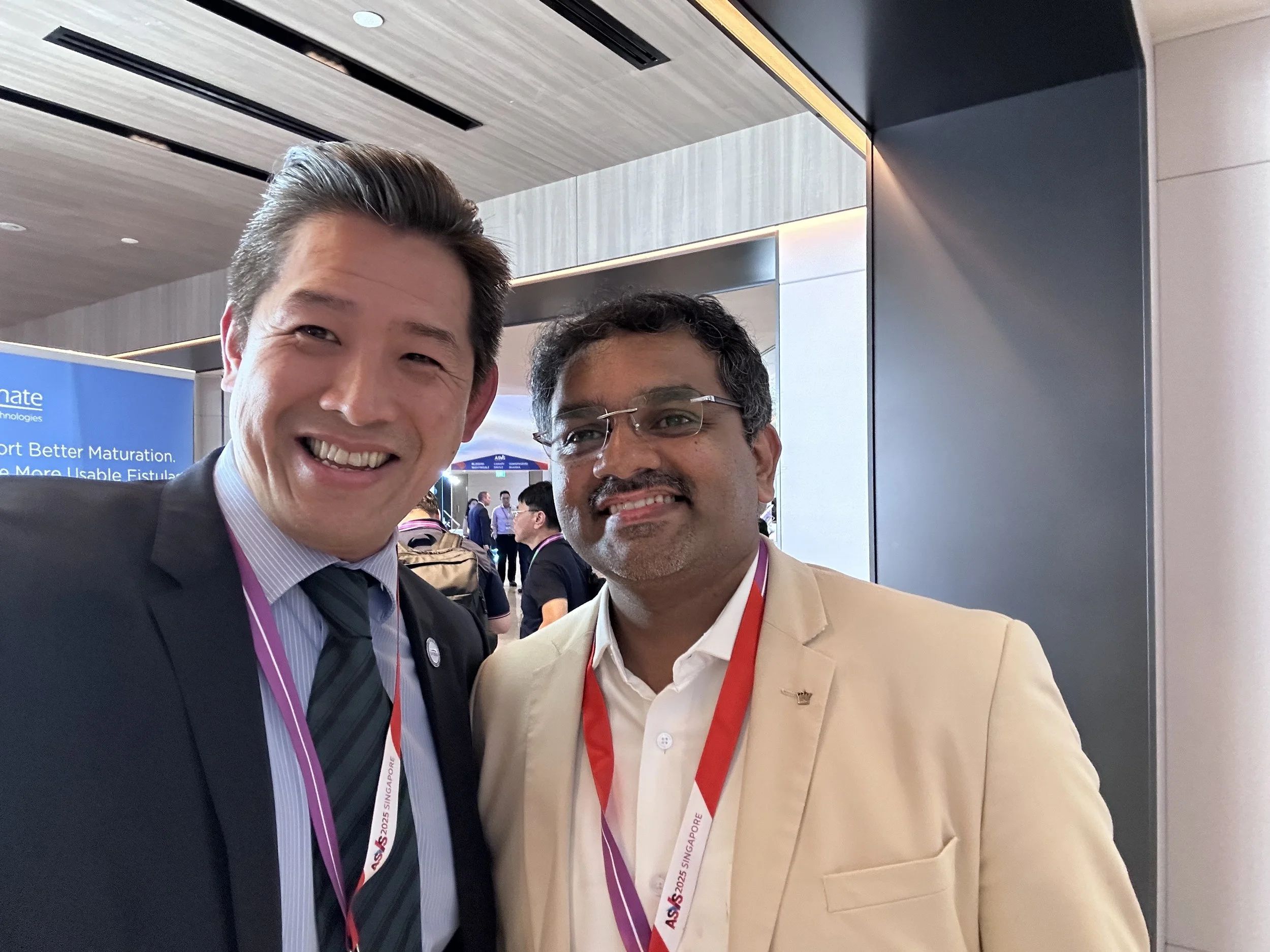
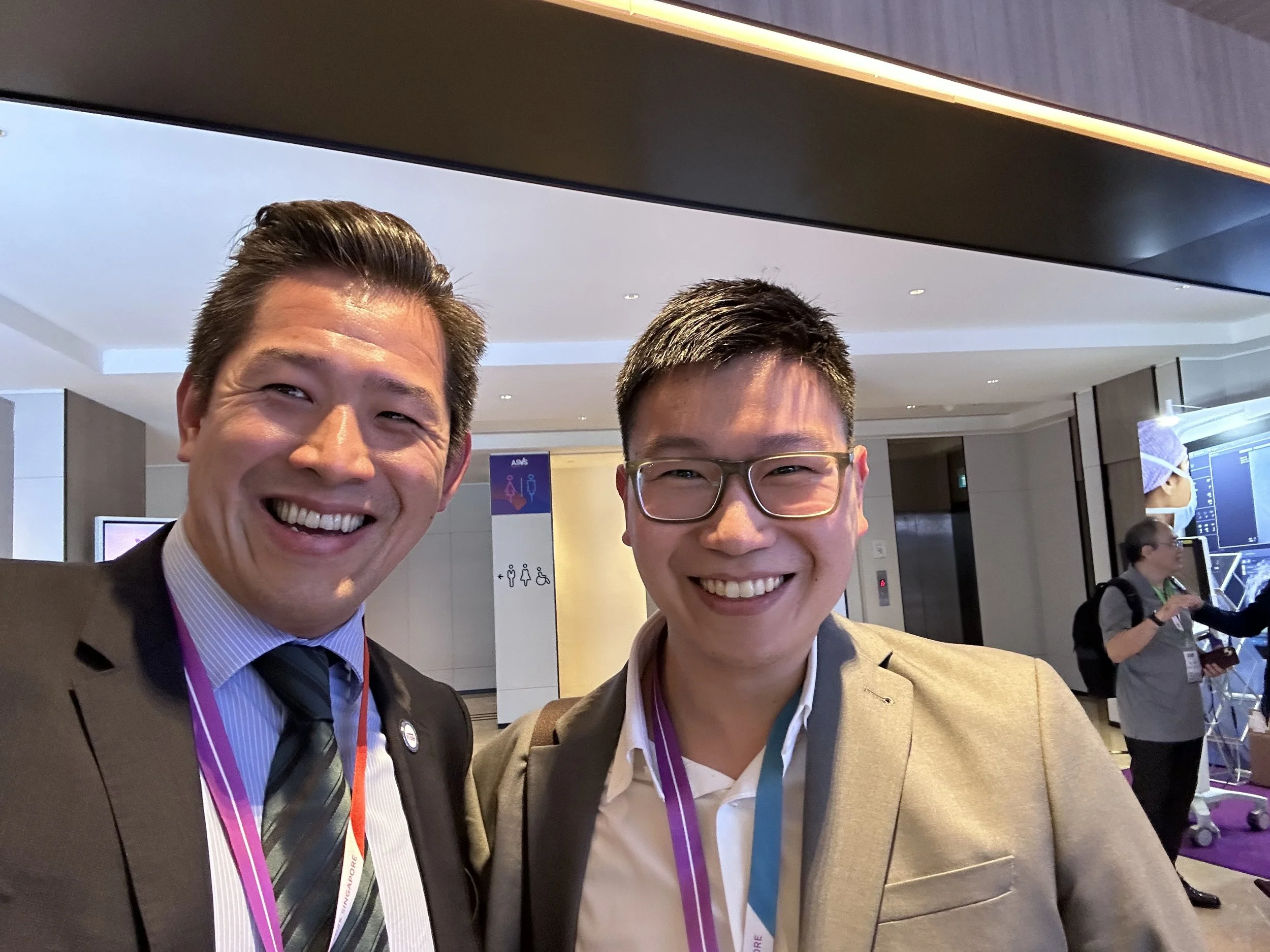
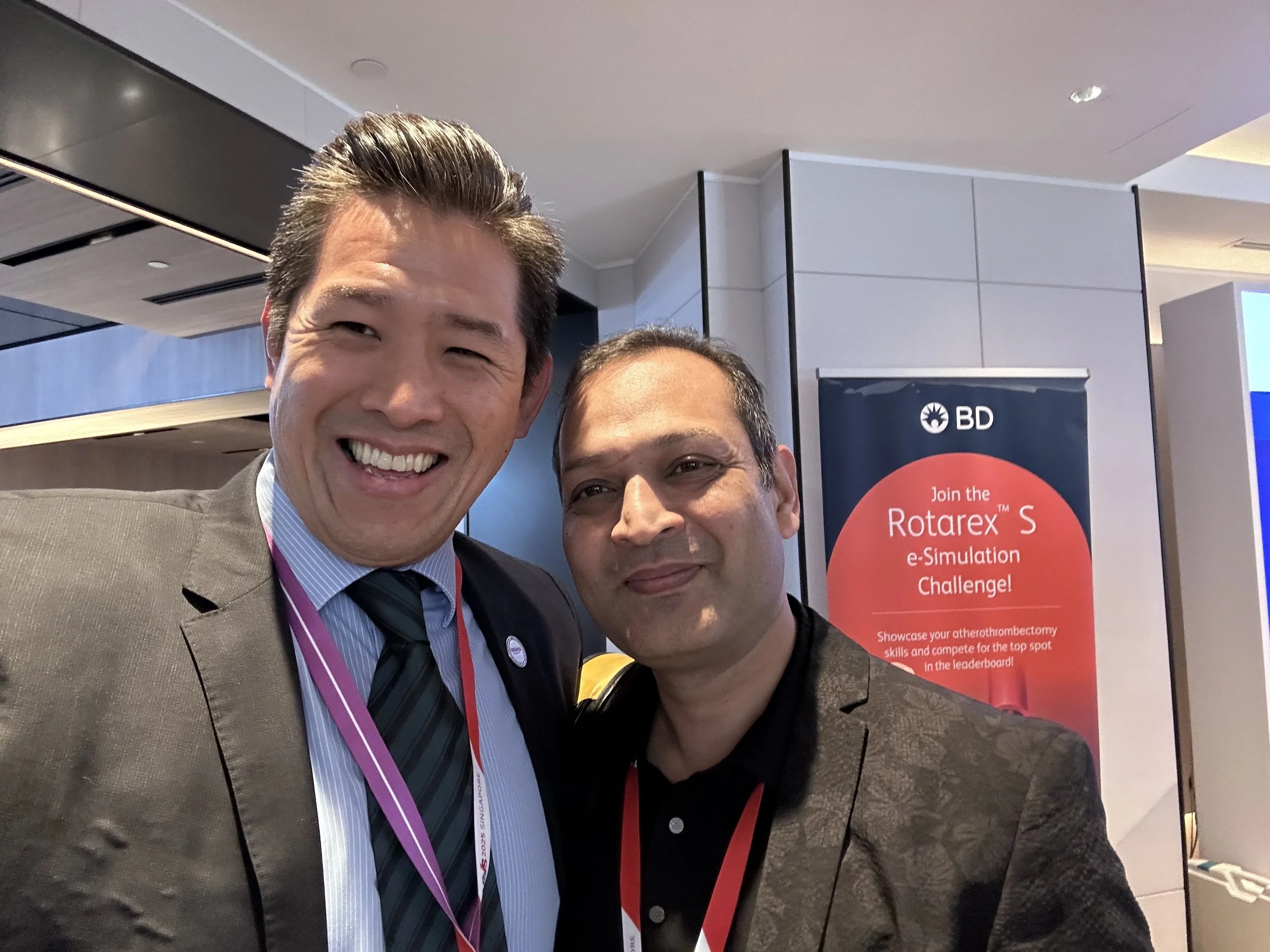
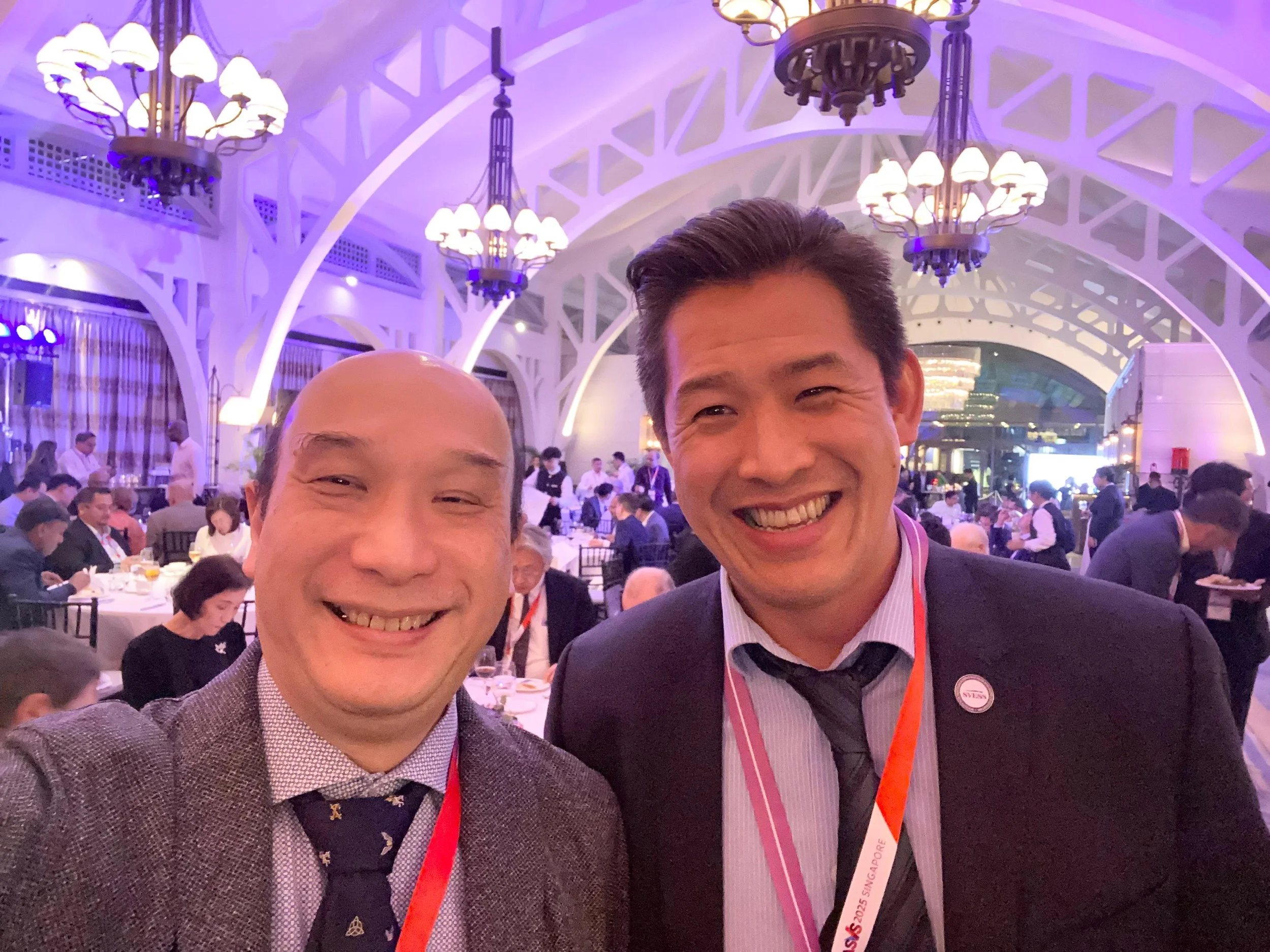
One of the pleasures of ASVS 2025 was reconnecting with friends and colleagues from across the world. Sharing experience gives us opportunities to question assumptions, discuss difficult decisions and learn from approaches used in different settings.
The photographs below capture some of those connections. They are a reminder that professional education also happens through conversation and collaboration.
What do these discussions mean for patients?
The message I took from these two talks is that established surgical skills and new technology both need thoughtful application. The aim is to understand the condition, explain the available options and agree a plan suited to the individual.
If you are discussing an aortic aneurysm with your surgeon, useful questions include:
What do my scans show, and how has the aneurysm changed?
Is surveillance appropriate, or is there a reason to consider repair now?
What are the benefits and risks of the options suitable for my anatomy?
What follow-up would I need after treatment?
I am grateful for the opportunity to share my work at ASVS 2025 and learn from colleagues. Continuing education remains part of how I approach vascular care, alongside careful assessment and clear communication with patients.

Sharing perspectives with fellow panellists at ASVS 2025 in Singapore.
Vascular assessment in Singapore
For questions about known aortic disease or treatment options, contact Andrew Choong Vascular Surgery at Mount Elizabeth Novena Specialist Centre, #09-22, 38 Irrawaddy Road, Singapore 329563. Previous scan reports and a medication list can help make the consultation more useful.
You can also explore my aortic awareness information and educational channels and updates.
This is a retrospective of a professional meeting and provides general education. Decisions about investigation or treatment require an individual clinical assessment.
World Patient Safety Day: Safer Vascular Care Starts Early
Safer vascular care starts with careful assessment and a clear treatment goal. Dr Andrew Choong explains why symptoms, scans, individual risks and patient preferences should guide decisions about monitoring, medication and surgery.
Safe vascular care begins before an operation or procedure is discussed. It starts with understanding the symptoms, examining the circulation, reviewing the right scans and asking what we are trying to prevent or treat.
For World Patient Safety Day, my message is that careful decisions matter at every stage. Aneurysms, blocked arteries, diabetic foot problems, deep vein thrombosis and carotid disease can have serious consequences, but their management needs to fit the individual patient.
Why does safety start with the assessment?
Similar symptoms can have different causes. Leg pain may relate to arterial circulation, veins, nerves or joints. Swelling may have several explanations. A scan abnormality also needs to be interpreted in context: we need to understand whether it explains the symptoms and whether it poses a risk that treatment can meaningfully reduce.
I begin by listening to what has changed and how it affects daily life. Examination, including pulse checks when appropriate, helps guide further investigation. Reviewing existing scans and previous treatment information can be as important as deciding whether another test is needed.
What problem is treatment meant to solve?
This is a practical question to ask in any vascular consultation. The goal might be to improve walking, support a wound's healing, reduce aneurysm-related risk or treat a blood clot. Different goals lead to different choices and different measures of success.
For example, assessment of peripheral arterial disease considers both walking symptoms and whether blood supply is sufficient for the foot. Assessment of aortic disease considers the part of the aorta affected, the scan findings, symptoms and overall health. A procedure is useful when its expected benefits justify its risks for that particular situation.
Can surveillance be an active treatment plan?
Yes. For some patients, monitoring and risk-factor management are the appropriate next steps. Surveillance means a planned review of the condition, with agreed follow-up and an explanation of what changes should trigger earlier reassessment. It does not mean ignoring a known problem.
Managing blood pressure, cholesterol, diabetes and smoking can be central to vascular care. The details depend on the condition and prescribed treatment. A good plan makes clear what needs monitoring, who is responsible for follow-up and what the patient should do if symptoms change.
Is the newest or least invasive procedure always safest?
No. Angioplasty, stents, endovascular repair, open surgery and clot-removal procedures each have roles. Their suitability depends on anatomy, disease severity, urgency, other medical conditions and the durability needed. A smaller incision alone cannot answer those questions.
Sometimes an endovascular approach is appropriate. Sometimes open surgery or a combination of techniques is a better fit. In other cases, an intervention would add risk without sufficient benefit. My aim is to explain the available options in relation to your condition rather than let a particular technology determine the plan.
How can patients take part in safer decisions?
Bring an up-to-date medication list, relevant scans and information about previous procedures. Tell the clinical team about allergies, kidney disease, previous reactions to contrast and concerns about recovery. These details help planning.
Questions worth asking include:
What is the diagnosis, and how certain are we?
What benefit would this treatment offer me?
What are the important risks and alternatives?
What happens if we monitor the condition first?
What follow-up and warning signs should I understand?
You should have an opportunity to discuss what matters to you, including mobility, independence and time away from work or family responsibilities. Clear explanations support a decision you understand.
When should assessment happen urgently?
Some changes cannot wait for scheduled review. Sudden severe chest or back pain, new stroke symptoms, collapse, serious breathlessness or a suddenly cold, painful or weak limb need emergency care. A deteriorating foot wound or new painful leg swelling also needs prompt assessment. If emergency ambulance help is needed in Singapore, call 995.
Where can I discuss my vascular care plan?
For a non-emergency assessment, scan review or second opinion, contact Andrew Choong Vascular Surgery at Mount Elizabeth Novena Specialist Centre, #09-22, 38 Irrawaddy Road, Singapore 329563. Careful assessment and a clear discussion of options are the starting point for choosing treatment at the right time.
Keyhole Vascular Treatment | Endovascular Surgery
Endovascular surgery treats blood vessels from the inside through a small access point. Dr Andrew Choong explains balloons, stents, stent-grafts and clot-removal devices, and why suitability depends on the condition and scan findings.
Endovascular treatment means treating a blood vessel from the inside. Through a small access point in an artery or vein, I can guide specialist instruments to the area that needs treatment. This is often described as “keyhole” or minimally invasive vascular surgery.
In this video, I introduce some of the tools used in modern vascular practice. The same small access point can support very different procedures, so it helps to understand the problem each tool is designed to address.
How do the instruments reach the blood vessel?
A small tube called a sheath provides access into the artery or vein. Guidewires and catheters can then be passed through it, with imaging used to guide their position. Depending on the condition, the treatment may involve balloons, stents, covered stent-grafts or devices designed to remove clot.
The access site and instruments are chosen for the anatomy and the intended procedure. The visible skin opening is only one part of the treatment: detailed planning and precise work take place inside the circulation.
How can a stent-graft treat an aneurysm?
An aneurysm is an abnormal enlargement of an artery. For a suitable aortic aneurysm, an endovascular stent-graft can create a channel for blood flow inside the diseased vessel. In my video, I describe this as a pipe within a pipe.
The graft is designed to seal against appropriate portions of the artery and exclude the aneurysm from the main blood flow. Whether this is possible depends on the shape, size and location of the aneurysm and the arteries used for access. You can read more in my aortic disease and aneurysm treatment guide.
Endovascular aneurysm repair also requires follow-up. Scans help check the graft and aneurysm over time, because treatment does not remove the need to monitor the remaining aorta.
What do balloons and stents do for narrowed arteries?
When an artery is narrowed or blocked, angioplasty uses a balloon to widen an appropriate segment. A stent may be used to support the treated vessel. The aim is to improve blood flow where the narrowing is causing a clinically important problem.
These techniques may be considered for selected patients with peripheral arterial disease, including some people with substantial walking limitation or threatened wound healing. Medication, risk-factor management and suitable exercise remain important; a scan showing narrowing does not automatically mean a stent is needed.
Can endovascular tools remove blood clots?
Some specialist devices can break up or remove clot through a catheter. Aspiration devices use suction; other mechanical systems work differently. The tool depends on what is blocking the vessel, where it is located and the patient's condition.
In selected cases of deep vein thrombosis or pulmonary embolism, a procedure to remove clot may be appropriate. It is not the standard answer for every blood clot. Anticoagulation and other treatments must be considered alongside the potential benefits and risks of an intervention.
Likewise, an artery blocked by longstanding plaque is not the same as a vessel containing a recent clot. Descriptions such as “drill” or “vacuum” are useful visual analogies, but they do not mean every blockage can or should be treated in the same way.
Does “keyhole” mean the procedure is minor?
No. A small access point can be used to treat a major vascular condition. Endovascular procedures can offer advantages for suitable patients, but they still carry risks and may require further treatment or ongoing surveillance. Some patients are better served by open surgery, a combined approach or medical management.
Before treatment, I consider the scans, overall health, clinical urgency and the outcome we are trying to achieve. I also discuss recovery, follow-up and alternatives so that the plan is understandable, rather than simply choosing the newest device.
Where can I discuss vascular treatment in Singapore?
For an individual opinion about vascular or endovascular treatment, contact Andrew Choong Vascular Surgery at Mount Elizabeth Novena Specialist Centre, #09-22, 38 Irrawaddy Road, Singapore 329563. Bring relevant scan reports and previous treatment information if available.
The tools are valuable when they solve the right problem. My role is to connect those options to your anatomy, symptoms and goals, and explain which approach is appropriate for you.
Aortic Dissection Awareness Day: Recognising a Vascular Emergency
Aortic dissection can affect blood flow throughout the body and needs urgent recognition. In his awareness talk, Dr Andrew Choong explains warning symptoms, appropriate imaging, treatment differences and the importance of long-term follow-up.
Aortic dissection is a medical emergency in which blood enters a tear in the inner lining of the aorta and separates layers of its wall. Because the aorta supplies blood to the whole body, the consequences can develop quickly and involve more than the chest.
In this Aortic Dissection Awareness Day talk, published on 19 September 2024, I explain why recognising the possibility matters. I am Dr Andrew Choong, a vascular surgeon in Singapore. My message is to think about the aorta when symptoms and circumstances suggest a serious aortic problem, so that appropriate assessment is not delayed.
What happens during an aortic dissection?
The aorta is the main artery leaving the heart. It travels through the chest and abdomen, with branches supplying the brain, arms, abdominal organs and legs. Its wall is made of layers.
When blood tracks between those layers, it can disrupt blood flow to important branches. A dissection can also be associated with rupture or other life-threatening complications. The location and extent determine which organs are at risk and what treatment is needed.
A dissection is different from an aneurysm. An aneurysm is an abnormal enlargement of an artery; dissection refers to separation within the wall. Both fall within aortic disease, but they are not interchangeable terms.
Which symptoms should raise concern?
Sudden, severe chest or back pain is an important warning pattern, especially when the pain is at its worst from the beginning. Some people describe tearing pain, but that description is not essential. Abdominal pain or other symptoms may occur.
Depending on the branches involved, there may also be fainting, stroke-like symptoms, severe breathlessness or a painful, cold or weak limb. In the talk, I describe aortic dissection as a condition that can mimic other emergencies.
If sudden severe symptoms occur, call 995 in Singapore for emergency assessment. Do not wait for a clinic appointment or try to decide from an online checklist whether the pain is definitely a dissection. Other causes of sudden severe pain may also require urgent care.
How do doctors diagnose aortic dissection?
The emergency team considers the symptoms, examination and medical history, including known aortic disease or relevant inherited conditions. High blood pressure is an important risk factor, although its presence alone does not diagnose a dissection.
CT angiography is commonly used when acute aortic disease is suspected because it can show the aorta and its branches quickly and in detail. In particular circumstances, other imaging such as transoesophageal echocardiography or MRI may be appropriate.
The “think aorta” message is a prompt for timely clinical judgement and suitable imaging. It does not mean that every episode of back pain needs a CT scan. The choice of test depends on the level of concern and the patient’s condition.
How is an aortic dissection treated?
Treatment depends on which part of the aorta is involved and whether complications are present. A dissection involving the ascending aorta, called type A, generally requires urgent surgical assessment and repair.
A type B dissection does not involve the ascending aorta. If it is uncomplicated, treatment often begins with careful medical management, including control of blood pressure and heart rate, followed by surveillance. Complications such as threatened organ blood flow or rupture may require intervention.
For selected patients, an endovascular stent graft can be placed through the blood vessels to cover the entry tear and redirect blood flow. Other situations require open surgery. The safest approach is determined by the anatomy, urgency and specialist assessment.
Separate guides explain TEVAR for selected type B dissection and open, hybrid and endovascular aortic arch repair.
Why is follow-up important after treatment?
Recovery from the immediate event is one stage of care. The remaining aorta may still require imaging, blood-pressure management and specialist review. Follow-up helps the team identify changes and plan further treatment when necessary.
For non-emergency questions about known aortic disease or follow-up, you can explore my aortic awareness information and contact Andrew Choong Vascular Surgery. A family history of aortic disease may also warrant a discussion about appropriate assessment.
Current clinic location: Mount Elizabeth Novena Specialist Centre, #09-22, 38 Irrawaddy Road, Singapore 329563. Acute warning symptoms belong in an emergency service, where assessment and treatment can begin immediately.